
Cape Verde stopover for an Atlantic Crossing, yes or no?
- Media Viking Explorers

- Jun 21
- 7 min read

With the Viking Explorers, Cape Verde is used as a strategic stopover to split the Atlantic crossing and give both crew and boat a proper reset. It allows time to rest, inspect the vessel, and refine onboard routines before the longer ocean leg.

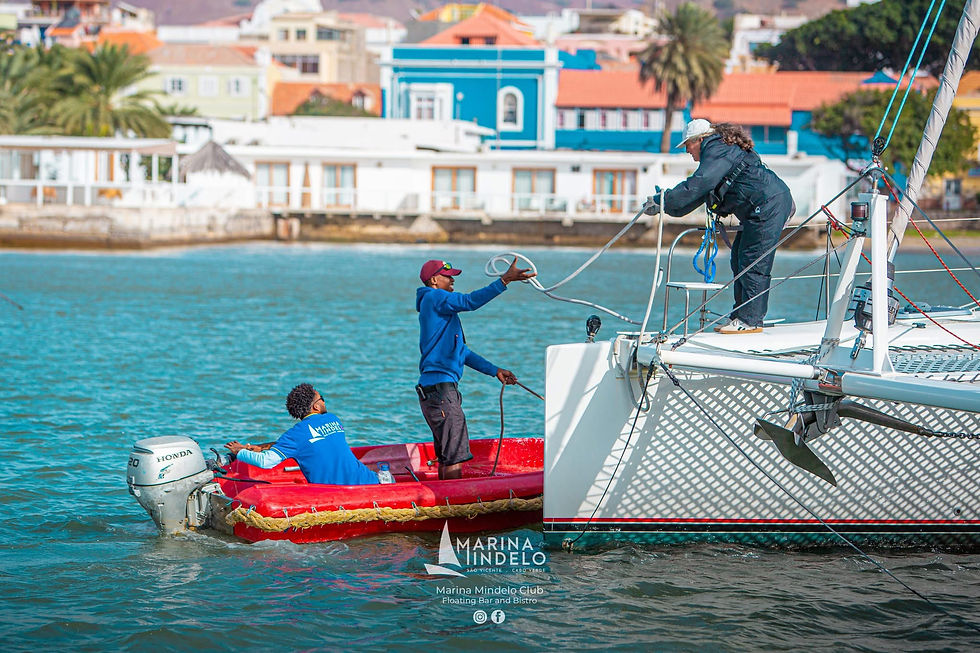
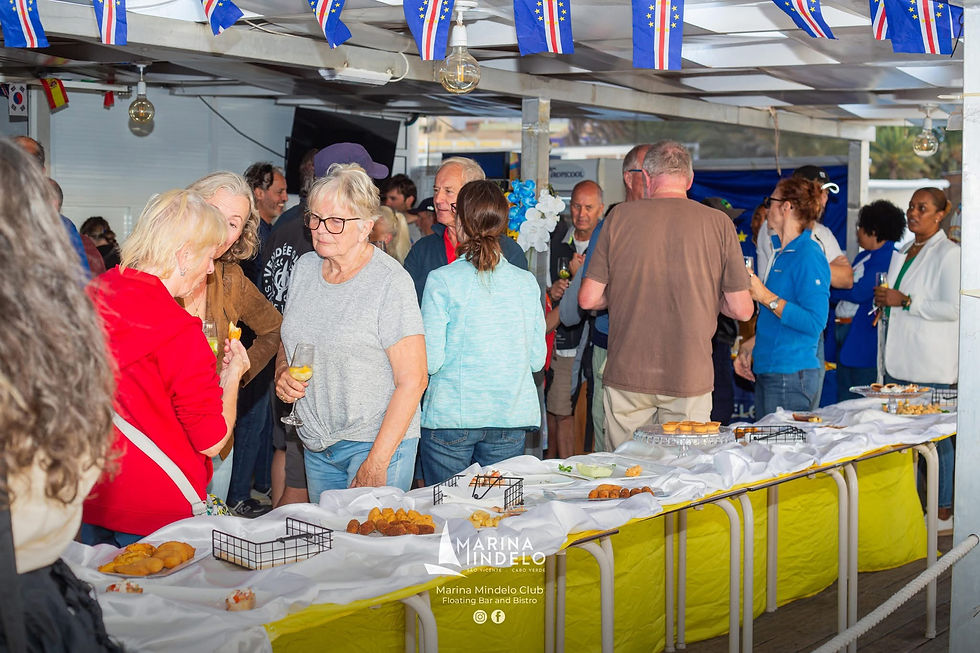
All logistics in Cape Verde are fully coordinated and managed by the Viking Explorers team. Participants are welcomed at Marina Mindelo on São Vicente Island, where support services, local assistance, and arrival procedures are already in place. The stopover also includes a welcome party, giving crews the opportunity to relax, connect with fellow participants, and enjoy the unique atmosphere of Mindelo before continuing across the Atlantic.
The result is a more controlled, better-paced, and safer transition into the Caribbean crossing.
A Cape Verde stopover for Atlantic crossings usually sounds simple at first - break the passage, catch your breath, then continue west. In practice, it is one of those routing decisions that looks very different once weather, crew stamina, provisioning, paperwork, and boat pace are all on the table.
For some crews, Cape Verde is the perfect halfway reset. For others, it adds complexity without adding much comfort. The right answer is not based on romance or tradition. It comes down to your boat, your crew, your schedule, and how you want the crossing to feel.

Why sailors consider Cape Verde at all
The appeal is easy to understand. Instead of sailing from the Canary Islands straight to the Caribbean in one long push, you split the trip into two legs. That can feel more manageable, especially for crews making their first transatlantic passage or sailing with children.
A stop in Cape Verde can also improve the rhythm of the voyage. You get time to inspect the rig, top up fuel and food, address small gear issues before they become big ones, and let everyone sleep without a watch system for a few nights. That reset matters more than many crews expect.
There is also a routing logic behind it. Boats leaving from the Canaries often head south "until the butter melts" and then west anyway to pick up more reliable trade wind conditions. Cape Verde sits naturally on that line for many passage plans, so the stop is not necessarily a major detour.
When a Cape Verde stopover for Atlantic crossing makes sense
If your boat is moderately paced, your crew is capable but not heavily offshore-tested, and you want a more structured progression into the Atlantic, the stop can be a very smart choice. It turns one very long offshore commitment into two more digestible passages.
This is especially useful for crews who are still fine-tuning onboard routines. The first leg gives you a real offshore shakedown. By the time you arrive in Cape Verde, you usually know whether your watch system works, whether your sail plan is balanced, and whether your provisioning assumptions were realistic.
It can also make sense if your departure timing is flexible enough to wait for a sensible weather window on both legs. That point is often overlooked. A stopover only helps if you are willing to route patiently, not if you are forcing departures to match an arbitrary calendar.
For rally sailors, the stop becomes even more valuable when logistics support is built around it. Marina coordination, local arrival guidance, and help with formalities can turn a potentially awkward stop into a smooth and welcome pause. That is one reason some crews prefer a supported format rather than piecing everything together on the fly.
When it may not be the best choice
Not every Atlantic crossing benefits from a stop. Fast boats with experienced crews often prefer to leave the Canaries and keep going. Once the boat settles into the trade winds and everyone finds their rhythm, interrupting that momentum is not always attractive.
There is also the issue of complexity. Every landfall adds administration, maneuvering, fuel calculations, provisioning choices, and another departure decision. If your goal is a clean ocean passage with fewer moving parts, going direct can be the simpler and calmer option.
Timing matters too. If your schedule is tight, a stop can compress your weather decisions. You may arrive in Cape Verde happy to rest, only to realize the next favorable departure window is not aligned with your plans. That is not a failure of the route - it is just the reality of offshore sailing.
The real trade-off: comfort versus continuity
Most crews frame this as a safety question, but more often it is a continuity question. Do you want to settle into one long passage, or do you want a deliberate pause in the middle?
A stop can reduce fatigue and create space for maintenance. It can also break offshore confidence at exactly the moment the crew is beginning to feel capable and settled. Some sailors arrive in Cape Verde relieved. Others arrive thinking we were finally in the groove.
Neither reaction is wrong. The important part is being honest about how your crew handles fatigue, uncertainty, and transitions. Ocean crossings are rarely defined by the big dramatic moments people imagine. They are defined by sleep, routine, appetite, morale, and how well the crew copes when simple tasks stop feeling simple.
What changes operationally with a Cape Verde stop
The first change is provisioning strategy. Instead of loading entirely for a full Atlantic run from the Canaries, you can divide stores into two phases. That gives you flexibility, but it also requires more planning. You need to know what is worth carrying from Europe and what you can reasonably expect to source during the stop.
Fuel and water planning also shift. Some crews use the stop to carry less weight on the first leg and replenish before heading west. Others prefer to leave the Canaries fully loaded and treat Cape Verde as backup rather than dependency. The better choice depends on your tankage, power generation, and confidence in local supply.
Maintenance planning becomes more strategic as well. Cape Verde is not where you want to discover a major systems problem you should have solved earlier, but it is a very useful place to catch smaller issues. Chafe, loose fittings, charging irregularities, and sail handling tweaks are far easier to manage in harbor than at sea.
Then there is customs and arrival handling. This is one area where crews often underestimate the value of support. After an offshore leg, the last thing most sailors want is confusion around procedures, marina arrangements, or local logistics. Good preparation makes the stop feel purposeful rather than draining.
Weather and routing: why "it depends" is the only honest answer
Sailors love clean routing advice, but Atlantic crossings rarely reward rigid thinking. A Cape Verde stopover for Atlantic crossing plans can work beautifully in one season and feel less compelling in another.
Trade wind patterns, departure date, and your preferred angle to the Caribbean all affect the calculation. Some crews want the most direct line to the Eastern Caribbean. Others are happy to sail extra miles for better wind angles or a more comfortable motion. Cape Verde may fit naturally into one strategy and not the other.
Boat type matters too. Heavier cruising monohulls, performance cruisers, and catamarans can all make the same route feel very different. A crew that averages modest daily runs may welcome the psychological and practical break. A faster boat may see the stop as unnecessary interruption.
That is why experienced planning should begin with the boat and crew, not with a fashionable route. The route serves the passage. The passage should not be forced to serve the route.

The crew factor is bigger than most people expect
Many Atlantic decisions are presented as technical, but they are often human. If one person onboard is excited and the other is quietly worried about the nonstop leg, a stop can transform the tone of the whole crossing.
That does not mean the more cautious voice should automatically decide the route. It means good skippers pay attention to morale before departure, not after problems appear. A rested, confident crew makes better decisions, handles sail changes more smoothly, and enjoys the passage more.
Families often feel this most clearly. Children do not care whether the routing looks elegant on a chart. They care about rhythm, food, rest, and the mood onboard. A well-timed stop can reset all of that.
A supported stop can change the experience
Independent sailors are rightly proud of handling their own boat, but support and independence are not opposites. They can work very well together.
For crews joining a premium rally, like the Viking Explorers Rally; the value of a Cape Verde stop is not only the island itself. It is what happens around it - preparation before departure, practical assistance on arrival, shared information between boats, and the reassurance that if something needs attention, you are not solving every detail alone.
That is where a smaller, more personalized fleet has an advantage. With limited numbers and direct organizer involvement, the stop feels less like a crowded event and more like a well-managed stage of a serious offshore adventure. Viking Explorers has built its rally approach around exactly that balance: we organize, you sail.
So, should you stop?
If you want a more progressive Atlantic crossing, value a reset between legs, and appreciate the chance to inspect the boat and crew before committing to the main westbound run, Cape Verde is a strong option. If your crew is experienced, your boat is quick, and your goal is a cleaner one-shot passage from the Canaries to the Caribbean, skipping the stop may suit you better.
The best routing decision is the one that leaves your crew confident, your boat properly managed, and your passage enjoyable rather than merely endured. A Cape Verde stop is not a badge of seriousness and going direct is not a badge of toughness. It is simply a choice about how you want to cross an ocean - and the smartest crews make that choice before they cast off.

For more information visit www.vikingexplorersrally.com


Comments